
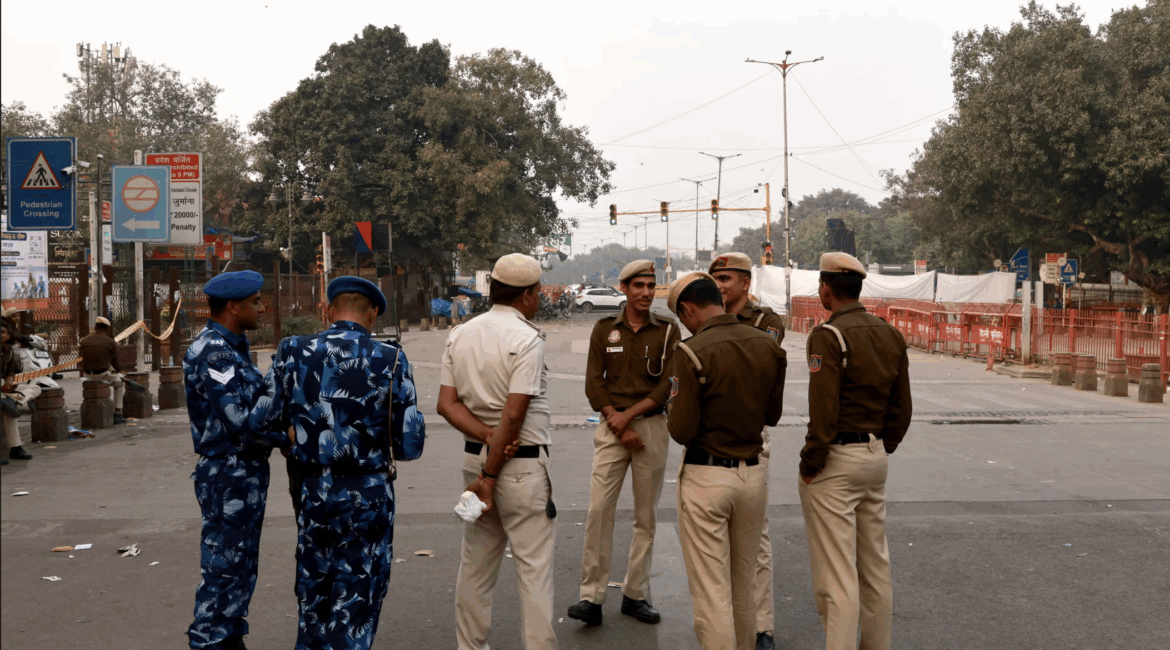
On Monday, November 10, 2025, India faced a stark reminder that terrorism doesn’t announce itself—it strikes during peak hours in busy districts outside national landmarks.
A car explosion near Delhi’s Red Fort killed 12 people and wounded over 30 others, marking the deadliest terrorist attack on India’s capital in more than a decade.
But this incident wasn’t just another tragedy. For security managers, risk executives, and facility directors across the region, it raises an urgent question: Is your organization’s security framework adequate?
India’s Cabinet officially confirmed on Wednesday that the blast was a deliberate terrorist attack perpetrated by “anti-national forces”—a designation that grants investigators expansive powers and signals the gravity of the threat.
Yet for most organizations, the critical takeaway extends beyond headlines. This attack demonstrates how modern terrorism exploits vulnerabilities in even the most visible, protected facilities.
Source ( The Guardian )
The Attack: What Actually Happened
The explosion occurred in bumper-to-bumper traffic during peak commute hours—precisely when maximum casualties could be achieved.
The car detonated with such force that bodies were thrown into the air and nearby vehicles ignited. Emergency response teams worked frantically to extract trapped victims and transport the wounded to hospitals.
By Wednesday, the death toll had climbed to 12 as several injured succumbed to their injuries.
The timing wasn’t accidental. Terrorists understand traffic patterns, peak hours, and security gaps.
They study landmarks and calculate maximum impact zones.
Organizations across India now face the sobering reality: if a major national landmark with government presence couldn’t prevent this attack, what protection do most facilities actually have?
Why This Matters Now: The Geopolitical Context
The Red Fort attack didn’t occur in isolation.
In April 2025, gunmen systematically targeted over 20 Hindu tourists, killing them in what India blamed on similar terror networks.
India responded in May with cross-border missile strikes, targeting camps and militant hideouts it linked to JeM.
Pakistan retaliated with missile and drone strikes, bringing two nuclear-armed nations closer to war than they had been in decades.
A U.S.-led ceasefire temporarily halted hostilities, but tensions remained extremely high.
India’s government repeatedly vowed that any further terrorist act on Indian soil would be treated as an act of war.
With that backdrop, the Red Fort bombing represents not just a criminal act—it’s a geopolitical provocation with potential for regional destabilization.
For organizations operating in India or South Asia, this context is critical: security threats exist within a broader geopolitical framework.
Standard security protocols may prove insufficient when national interests are at stake.
A Security Imperative
The Delhi bombing offers critical lessons for any organization concerned about modern terrorism threats:
1. Conduct Comprehensive Risk Evaluation Your current security assessment may be outdated. The Red Fort incident proves that even high-profile, heavily-protected locations can be targeted. A thorough strategic security analysis should identify vulnerabilities specific to your facility, location, and industry sector.
2. Implement Proactive Threat Detection Intelligence-driven surveillance isn’t about paranoia—it’s about preparation. Organizations should establish monitoring systems, intelligence networks, and early warning protocols that can detect escalating threats before they materialize. The terror cell in Kashmir operated for months before authorities detected their explosive materials stockpile.
3. Develop Mission-Ready Response Protocols When threats emerge, response time is measured in minutes, not hours. Your security team should conduct regular drills, maintain clear command structures, and have predefined evacuation and lockdown procedures. Preparation saves lives.
4. Assess Supply Chain and Personnel Vulnerabilities The recovered explosives—2,900 kilograms of materials, chemicals, and detonators—didn’t materialize from nowhere. They were acquired, transported, and stored. Organizations should audit how materials enter their facilities, who has access to sensitive areas, and whether personnel vetting procedures are rigorous enough.
5. Establish Regional Security Awareness Geopolitical tensions affect security requirements. Organizations operating in South Asia should maintain awareness of regional developments, threat escalation patterns, and political flashpoints that could affect local security conditions.
Strategic Protection in Uncertain Times
Organizations facing these complex security challenges require more than standard security guards or basic alarm systems.
They need strategic partners who understand both operational security and the broader threat landscape.
Shield Corporate Security specializes in exactly this intersection: comprehensive risk management for organizations operating in high-threat environments.
Our approach combines proven operational experience with strategic analysis, enabling organizations to identify vulnerabilities, implement proactive threat detection, and maintain mission-ready response capabilities.
Whether your organization operates a corporate facility, manages critical infrastructure, or runs specialized operations in sensitive regions, Shield’s team brings recognized expertise in:
- Strategic Security Analysis: Comprehensive risk evaluation tailored to your facility and operational environment
- Intelligence-Driven Threat Detection: Proactive monitoring systems and early warning protocols
- Operational Security Consulting: Mission-ready response planning and security protocol development
- Specialized Sector Expertise: Proven experience protecting organizations in high-risk industries
The Delhi Red Fort bombing wasn’t an anomaly—it was a reminder that modern security threats are sophisticated, coordinated, and capable of striking even protected locations.
Organizations can no longer rely on reactive security measures.
Taking Action Now
The question isn’t whether your organization faces security threats. In today’s geopolitical environment, the question is whether your security framework is adequate to meet those threats.
The Red Fort incident demonstrated that comprehensive risk assessment, proactive threat detection, and professional security operations aren’t luxuries—they’re essential components of organizational resilience.
If your organization hasn’t conducted a comprehensive security evaluation recently, now is the time. If your threat detection capabilities rely primarily on reactive responses, that’s a vulnerability worth addressing immediately. If your security team lacks formalized response protocols and regular training, that’s a gap that requires urgent attention.
Shield Corporate Security invites security managers, risk executives, and organizational leaders to assess your current security posture. A strategic security consultation can identify vulnerabilities specific to your facility, provide clear recommendations for improvement, and ensure your organization is prepared for the threats of today’s environment.
The Red Fort bombing happened on November 10, 2025. Your organization’s security assessment shouldn’t wait.
FAQs
1. What security lessons can businesses learn from the 2025 Red Fort terrorist attack?
The Red Fort attack highlights the need for proactive threat detection, updated risk assessments, and mission-ready emergency protocols. Businesses must treat modern terrorism as a dynamic threat requiring expert security planning.
2. Why should organizations conduct a comprehensive security risk assessment?
A professional risk assessment identifies vulnerabilities in your facility, operations, personnel access, and supply chain. Shield Corporate Security provides tailored assessments that help organizations prevent and mitigate high-impact threats.
3. How does Shield Corporate Security help organizations detect emerging threats?
Shield Corporate Security uses intelligence-driven monitoring, surveillance strategy, and early-warning systems to identify suspicious activity or escalating threats before they materialize—crucial for preventing attacks.
4. What industries benefit most from strategic corporate security solutions?
High-risk industries such as critical infrastructure, energy, logistics, government contracting, finance, and multinational operations benefit from our specialized expertise in high-threat environments.
5. Why is proactive threat detection more effective than reactive security measures?
Reactive security responds after a threat is already underway. Proactive threat detection helps organizations identify risks early, reduce exposure, and activate protective measures before attackers can exploit vulnerabilities.
6. How can Shield Corporate Security strengthen an organization’s emergency response protocols?
We develop and implement mission-ready response frameworks—including evacuation planning, command structure setup, staff training, and live scenario simulations—to ensure rapid action during crises.
7. How does geopolitical tension affect corporate security in India and South Asia?
Regional tensions increase the likelihood of coordinated attacks and targeted disruptions. Shield Corporate Security helps organizations integrate geopolitical intelligence into their operational security planning.
Contact Shield Corporate Security today for a comprehensive risk evaluation and strategic security consultation. In an uncertain geopolitical environment, professional security expertise isn’t optional—it’s essential.
Shield Corporate Security: Proven Operational Experience. Strategic Security Solutions. Mission-Ready Protection.