
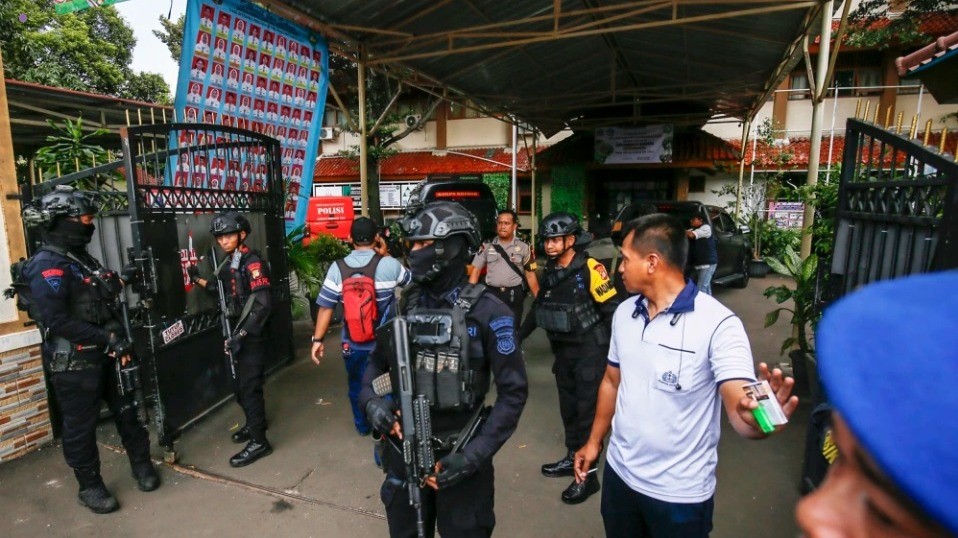
At approximately midday in Kelapa Gading, Jakarta, an explosion tore through a mosque housed within a school complex, injuring more than 50 people—primarily pupils attending Friday prayers. Authorities identified a 17-year-old student as the suspected perpetrator, who was also injured in the blast.
Early witness accounts suggest the teen may have faced prolonged bullying and had a history of producing violent drawings. These behaviours represent classic early-warning indicators often missed in institutions without structured behavioural threat assessment frameworks.
Investigators reported the presence of objects initially believed to be firearms—later identified as toy guns—alongside a dark green ammunition-style belt. While not operational weapons, the presence of replica firearm items indicates pre-event planning and symbolic intent, adding complexity to the threat profile.
Source ( BBC News )
More than 50 students injured in a single internal blast, inside what should be one of the safest spaces on a campus, underscores a troubling security trend emerging across schools and youth environments worldwide.
When a violent incident originates from within the facility, traditional perimeter-focused protection strategies break down.
This incident reinforces a growing operational reality: the most damaging threats are increasingly coming from individuals who blend seamlessly into the environment.
Understanding how a student was able to introduce a homemade explosive device into a school complex—undetected—holds urgent implications for facility managers, risk executives, and security directors responsible for safeguarding high-density or youth-based environments.
Operational Security Lessons: What Went Wrong?
1. Behavioural Indicators Were Present but Unaddressed
Students described the suspect as a “loner” who frequently produced violent imagery—behaviours strongly correlated with escalating grievance-based violence. The absence of a structured internal reporting pathway likely contributed to early signals going unreported or uninvestigated.
2. Inadequate Access Control for Personal Items
A homemade explosive device was brought onto campus without detection. This highlights vulnerabilities in:
- Bag-screening procedures
- Visitor and student access protocols
- Low-visibility internal carry-in risks
- Lack of intelligence-driven surveillance to detect abnormal movement patterns
3. High-Density Environments Without Protective Layers
Mosques, prayer halls, assembly areas, and cafeterias are predictable congregation points. Without layered protection—physical, behavioural, and procedural—they become high-impact opportunities for hostile actions.
4. Failure to Establish Clear Post-Incident Triage and Evacuation Protocols
With over 50 injured, the scale of trauma indicates slow or overwhelmed initial response. Educational facilities lacking scenario-based emergency training often struggle to execute coordinated evacuation and casualty triage.
Strategic Security Solutions: What This Means for Organisations
This incident reveals critical gaps that apply to schools, corporate campuses, government facilities, and any organisation with large daily foot traffic. Security teams should immediately reassess:
Behavioural Threat Management
- Implementation of structured behavioural threat assessment programs
- Staff training to identify and escalate concerning patterns
- Multi-disciplinary intervention frameworks combining counselling, security, and leadership
Internal Access & Surveillance Controls
- Enhanced detection for concealed or improvised devices
- Intelligence-driven surveillance that prioritises internal behavioural anomalies, not just perimeter threats
- Real-time reporting channels for early intervention
Emergency Response Preparedness
- Scenario-based drills aligned with explosive, fire, and crowd-impact events
- Clear communication and movement protocols for high-density areas
- Medical readiness and coordination with external emergency responders
Comprehensive Risk Evaluation
Organisations should adopt a holistic approach that assesses both external and internal vectors—including the evolving risk of youth-driven or grievance-fuelled incidents.
Final Thoughts
This incident is a sharp reminder that modern security requires far more than perimeter control — it demands a deeper understanding of human behaviour, internal movement patterns, and organisational vulnerabilities.
For leaders responsible for safeguarding people, operations, and business continuity, now is the time to reassess internal threat-detection frameworks, strengthen behavioural escalation pathways, and upgrade emergency readiness.
If your organisation is reviewing its current security posture or exploring stronger protective strategies, you can learn more about comprehensive security solutions at www.shieldcorporatesecurity.com